
Red Dog mine
Red Dog Mine


Shared Values, Common Goals, and Exceptional Results

The Red Dog zinc mine operates on land owned by the NANA Regional Corporation, Inc. (NANA), an entity wholly owned by the Native people of Northwest Alaska. The actual mining operation is conducted by Teck Cominco Alaska Incorporated. The parent for Teck Cominco Alaska is Teck Cominco Limited (the original parent was Cominco Ltd. prior to merging with the Teck Corporation in 2001).

NANA and Cominco became partners in the Red Dog project through a unique development agreement, which assured environmental protection and economic benefits for the Native people through the development of the world’s largest zinc mine.

More than two decades after the agreement was signed, the Red Dog mine stands as a model of responsible resource development, founded on the principles of consensus, cooperation and mutual respect between a mining company and indigenous people.

The Largest Zinc Mine In The World

When the ancestors of Northwestern Alaska’s Iñupiat people hunted the upper drainage of the Wulik River, they were unaware of the great treasure hidden beneath their feet — a vast deposit of zinc, lead and silver, which would come to be known as Red Dog.

Now the largest zinc mine in the world, Red Dog is the culmination of a visionary and fruitful alliance between Alaska Natives, a world-class mining company and various levels of government.

A joint venture between NANA Regional Corporation and Teck Cominco Alaska, the Red Dog project demonstrates that mining can be compatible with Iñupiat values and sustainable development. The mine also shows how modern industry can successfully develop and integrate a local workforce, in this case the Iñupiat people, who pursue a traditional lifestyle while enjoying the benefits of employment and modern vocational training.

Above all, the story of Red Dog confirms that mutual respect, shared values and a common goal can unite people of diverse backgrounds and cultures and inspire them to significant, wide-ranging, and mutually beneficial achievement.

A Major Zinc/Lead/Silver Deposit

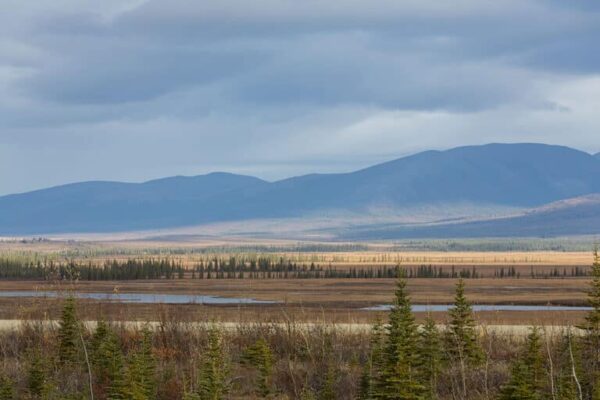
The Red Dog ore body is one of the world’s most significant zinc deposits, containing a number of ore bodies. The mine is located in Alaska’s Northwest Arctic Borough, in the DeLong Mountains of the western Brooks Range, 90 miles north of Kotzebue and 55 miles from the Chukchi Sea.

At the end of 2007, the site’s proven and probable reserves plus indicated resources amounted to 77.5 million tons, containing 17.5 percent zinc and 4.8 percent lead, as well as 2.8 ounces per ton of silver. In addition, Red Dog also contains 36.6 million tons of inferred resources. The entire deposit lies inside a relatively small area (one mile by one-half mile). The deposit is essentially flat-lying at the surface, making open pit mining the extraction method of choice.

Reserves And Resources

Red Dog began with a 40-year supply of known reserves. Subsequent exploratory drilling has added significantly to the reserves and resources at Red Dog. The Aqqaluk ore body, just north of the Main deposit, was discovered in 1995 and Paalaaq, an underground inferred resource just north of Aqqaluk, was discovered in 1997.

In 1999, drilling was extended beyond the immediate Red Dog area and Anarraaq, another underground inferred resource, was discovered seven miles northwest of the Main pit.

Recent exploration activity has focused on areas north of Anarraaq. While no additional discoveries have been made, confidence remains high that additional zinc resources are present. With such extensive reserves and resources, the site can continue providing economic benefits for decades to come.

Discovery And Confirmation

In 1968, Bob Baker, a bush pilot and prospector from Kotzebue, Alaska, brought the area to the attention of Irving Tailleur of the U.S. Geological Survey (USGS). Always on the lookout for mineral prospects, Baker had noticed a distinctive rusty coloring in a creek that cuts through the deposit, but he could not access the site with his fixed-wing aircraft. Tailleur, who was mapping the region, visited the area and immediately noticed abundant barite, black chert, siliceous sinter and iron oxide staining. His rock samples also indicated significant zinc and lead mineralization. Tailleur’s findings, and the apparent similarities between this site and other large zinc/lead deposits around the world, were published by the USGS in a 1970 report. Five years later, the Bureau of Mines confirmed that the site contained a substantial deposit.


©2009 NANA REGIONAL CORPORATION